Posted by David Walker
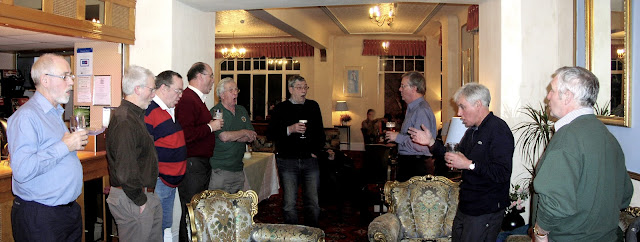
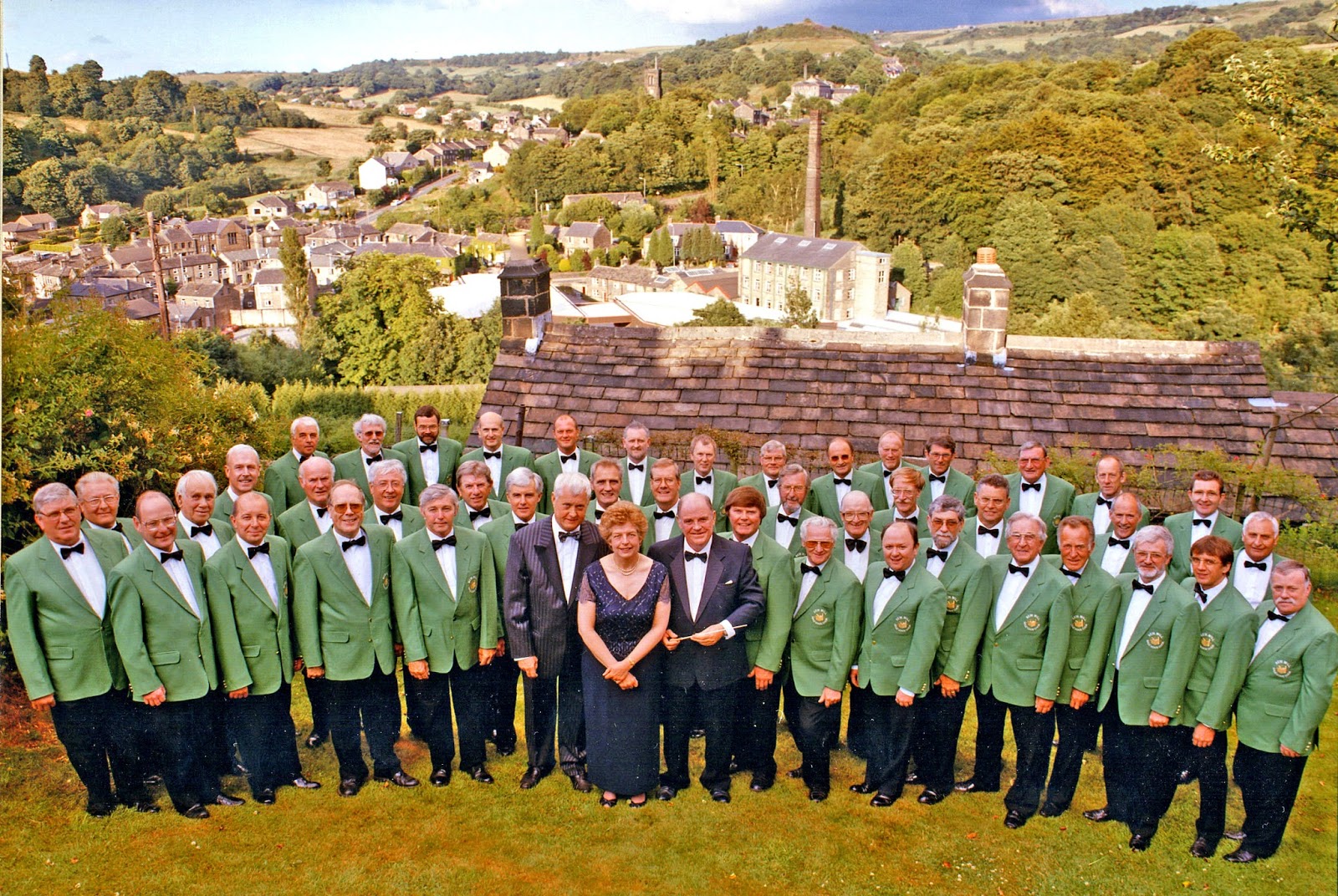
Our choir has its share of funny moments. When we go away on workshop weekends (Llandudno, Scarborough) and tours (Italy, Czech Republic, Barcelona, Poland) there are many opportunities to raise a smile. What follows is a collection of anecdotes. You may regard them as a series of in-jokes. We would prefer them to be seen as a celebration of our humanity and fellowship.
Moments of wonder, like arriving in a foreign land – the sights are familiar but the signs are in Chinese. Many of us are not musically literate; insecurity we can share in fun with Rupert Wilson, our bemused baritone. Surprise, when going over a choir favourite, that we haven’t been singing the right notes for several years. Geoff Gill, bass, advised us not to worry “you’ll be singing somebody’s notes.” Meeting someone we don’t know. The face, from another section, is recogniseable, but “What’s your name again?”
Llandudno, I ate breakfast with Graham Dawson, second tenor and Chairman. He finished and set off for his room. Five minutes later, I followed and bumped into him on one of the corridors, lost and puzzled. Same hotel, different year, some of us pitched up to the rehearsal room. Not nearly enough, not even Musical Director or pianist. Graham went in search and found them in the ballroom which was for our break-out sectional practice. We broke later, tenors to the ballroom. Basses and baritone stayed put. Who sat in the bass front row? John Mallinson, first tenor.
Sheila Asquith, a pal of Elizabeth Hambleton, a previous Musical Director, deputised when our pianist, Ann Levitt, went shopping to New York. Sheila had keyboard button failure. We were never sure what sort of piano, organ, harpsicord, banjo or whatever was coming next. It was a relief to get the metronome.
Poland, six of us sat out in Krakow Square. Big Dave from Edinburgh rubbed his hands together “I could just eat a biscuit.” We ordered. The serving wench only understood coffee however. Big Dave thought he mimed eating a biscuit. A huge slab of chocolate cake soon arrived. “Can we have five more spoons please?”
Time away is escape, from home and from the ‘tyranny of logic’. Permission to be faintly ridiculous; a zany view of the world that makes you smile. Jack Bex, first tenor, was run over by a car in front of New Mill Club before we’d even set off. It was said he was ‘trying to inspect the tyres on a moving vehicle. He was unbalanced, deflated and tyred. Radial pulse was measured. Cross, he was plyed with a cup of tea and soothed by middle-of-the-road music.
John Rotchell, bass, and I at the Llandudno hotel early Friday night. Escorted to our room by the hall porter who carried our bags. Hadn’t shaved and those trainers didn’t really go. Later in the bar we discovered he was the landlord. Just twelve of us and he bought us all a drink. The bus then arrived and suddenly the round got a lot bigger.
John, my room buddy, likes detail, things as small as Brian Cox atomic particles. Guess what his bedtime reading is? The Home Guard Manual 1941.
Peter Kennedy, who died recently, thought the world of the choir. His room buddy, John Ibbotson aka Ibbo, retired early after the Scarborough Saturday night Highlander ‘afterglow’. He’d leave the door ajar. Rod Gooch and Dave Haigh followed and shut the door for security. Pete couldn’t get in and Ibbo was not for rousing. Rod and Dave were and spotted the problem, “We’ve a spare bed.” Pete was undressed and in bed before the bedroom door was closed and locked. They’re just good friends.
Many opportunities to be a clot. Ibbo is our expert. Dressing up in various costumes, like in khaki, shorts and all, for Mad Dogs and Englishmen. Goes on too long and forgets his words – brilliant. Always tempted to overstep the bounds of propriety – hands over eyes and ears if we are out in public.
And there are things that just make you smile. Brian Higginbottom, a former bass, sang a classical piece beautifully, a twinkle in his eye as he acknowledged the applause. More than one fellow bass decided not to audition for future similar roles.
Some guys are intending to be funny, some are not. Some want to perform, some don’t. The choir interpretation makes it funny; a communal funny bone that celebrates the individual whatever their background and temperament.
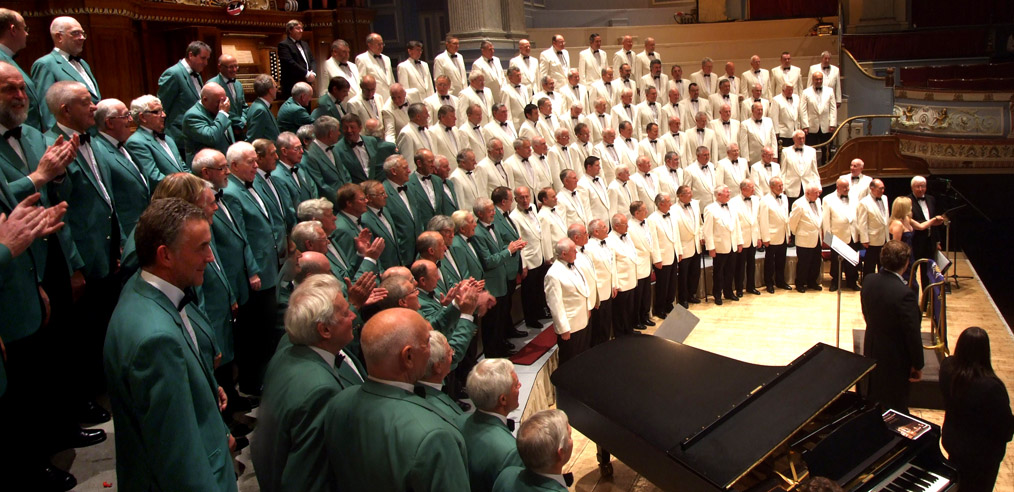
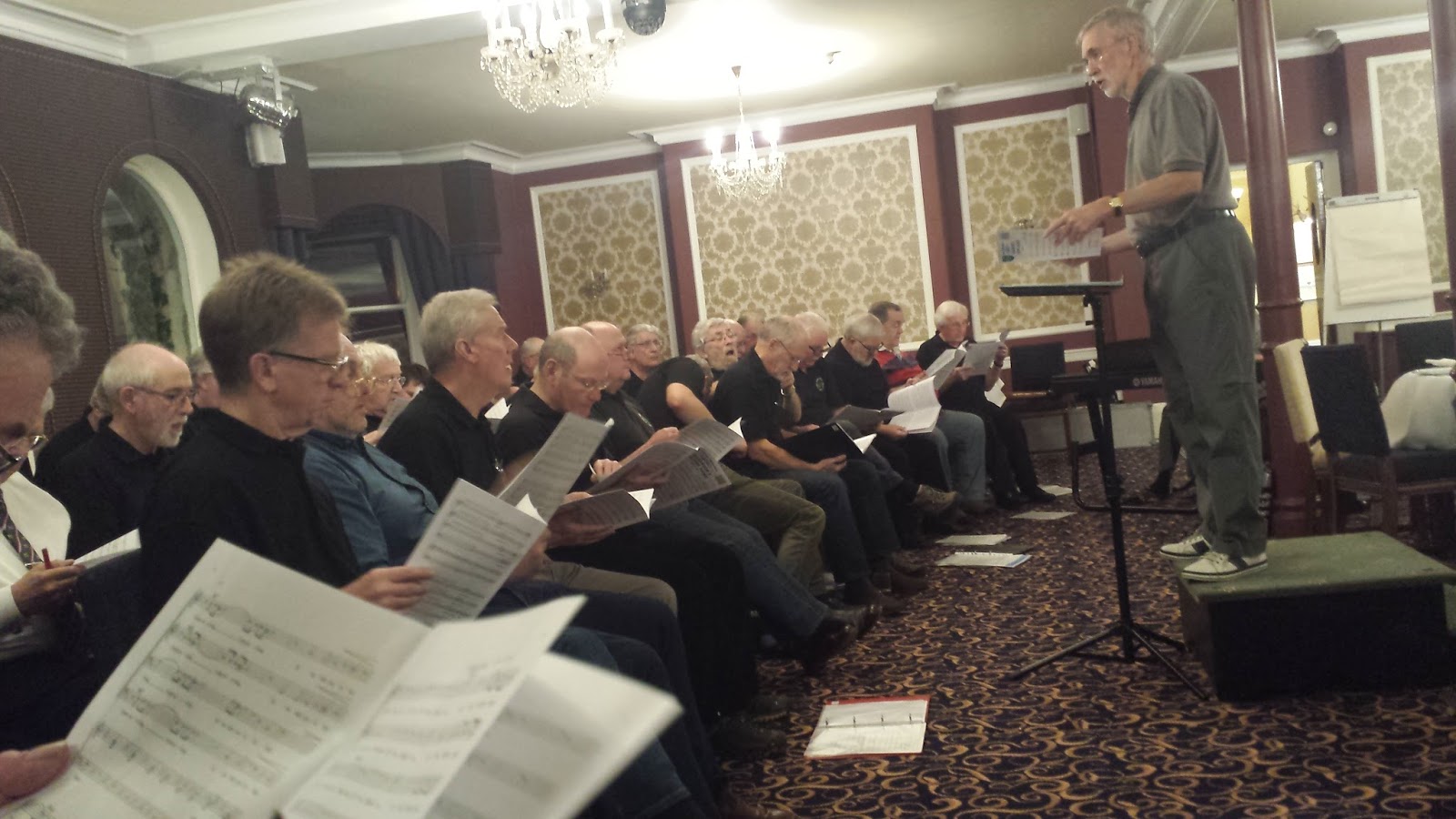
The choir has three aims. Learn to sing, learn to perform and enjoy both within a diverse and cohesive community. Singing and performing are guided by our professionals, pianist Emma and Musical Director, Alan. We already know how to enjoy each other in singing. Workshop weekends (Llandudno, Scarborough) and tours (Italy, Czech Republic, Barcelona, Poland) contain all of the above.